Menu
Geodesic Dome

Gudang Sex Barat — Premium Quality

Geodesic Dome Kits that are Easy to Build!

Geodesic Dome Greenhouse Kits for Sale

Gudang Sex Barat — Premium Quality

Geodesic Chicken Coop
Geodesic Dome Kits that are Easy to Build!

Geodesic Dome Greenhouse Kits for Sale

Gudang Sex Barat — Premium Quality

Geodesic Dome Greenhouse Kits for Sale

Gudang Sex Barat — Premium Quality


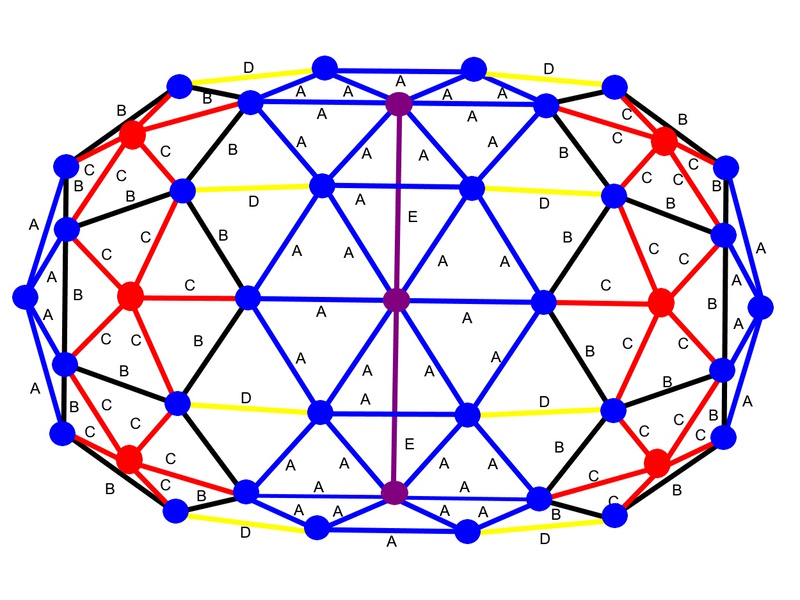
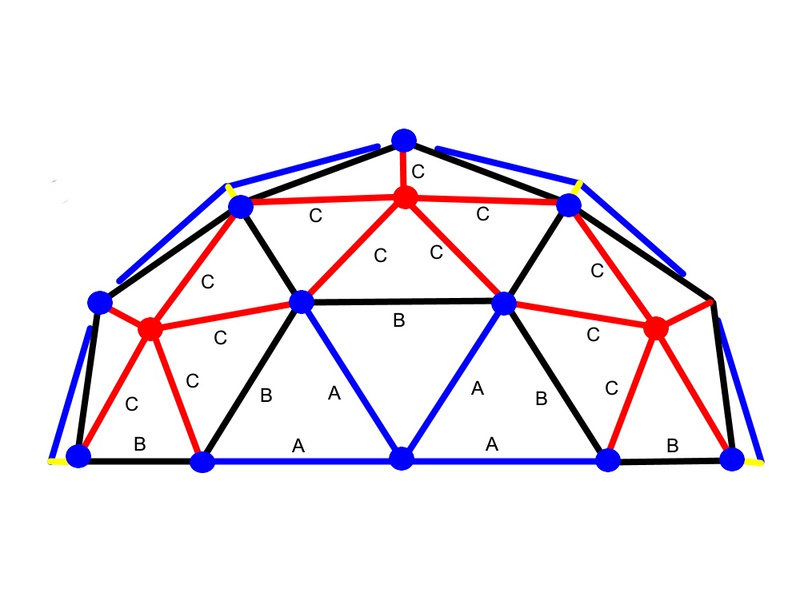
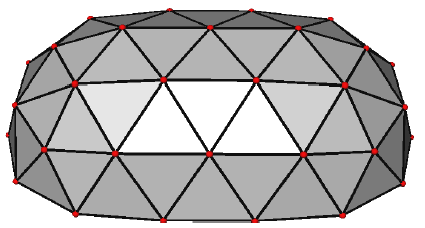
2v Tunnel Domes with 1 Extension Examples

  • 2v Tunnel Dome 1 Ext. Front View
    2v Tunnel Dome 1 Ext. Front View
  • 2v Tunnel Dome 1 Ext. Top Down View
    2v Tunnel Dome 1 Ext. Top Down View
  • 2v Tunnel Dome 1 Ext. Side View
    2v Tunnel Dome 1 Ext. Side View
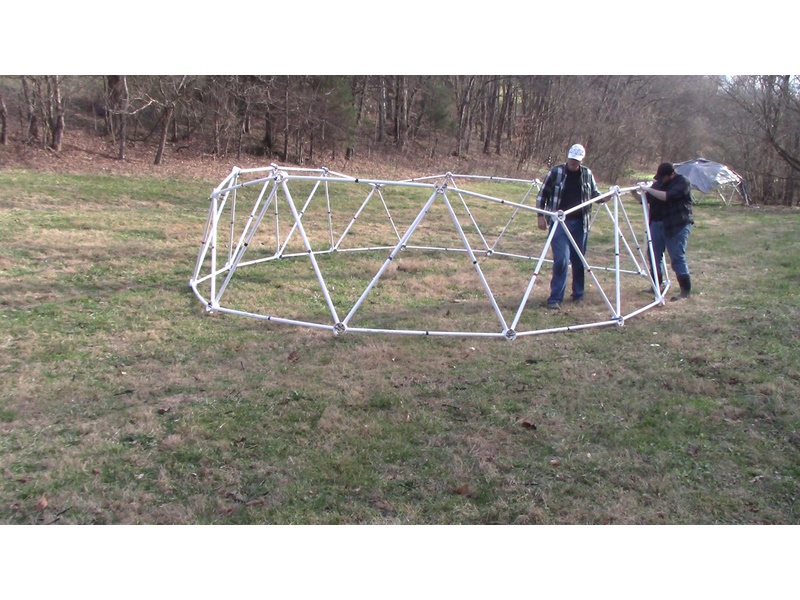
  • Building the 2v Tunnel Dome with 1 Extension
    Building the 2v Tunnel Dome with 1 Extension
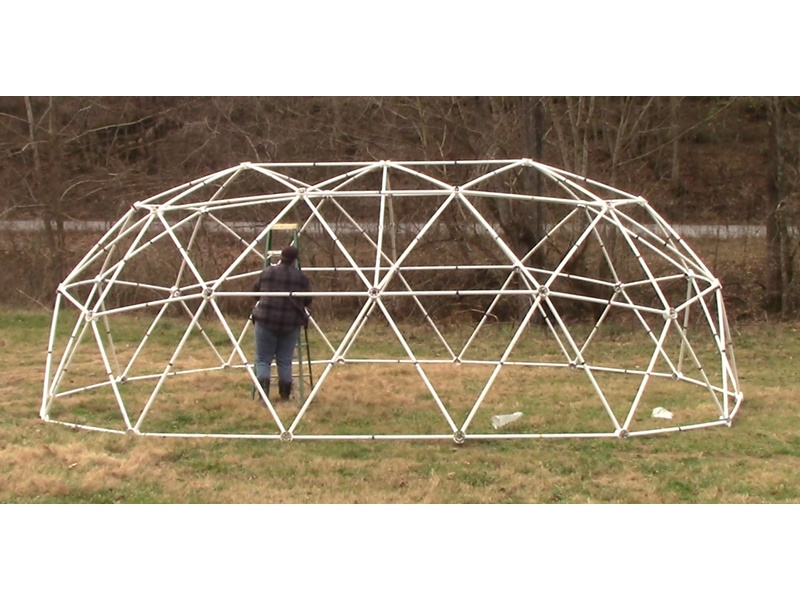
  • Completed 2v Tunnel Dome with 1 Extension
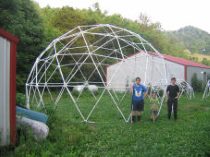
    Completed 2v Tunnel Dome with 1 Extension

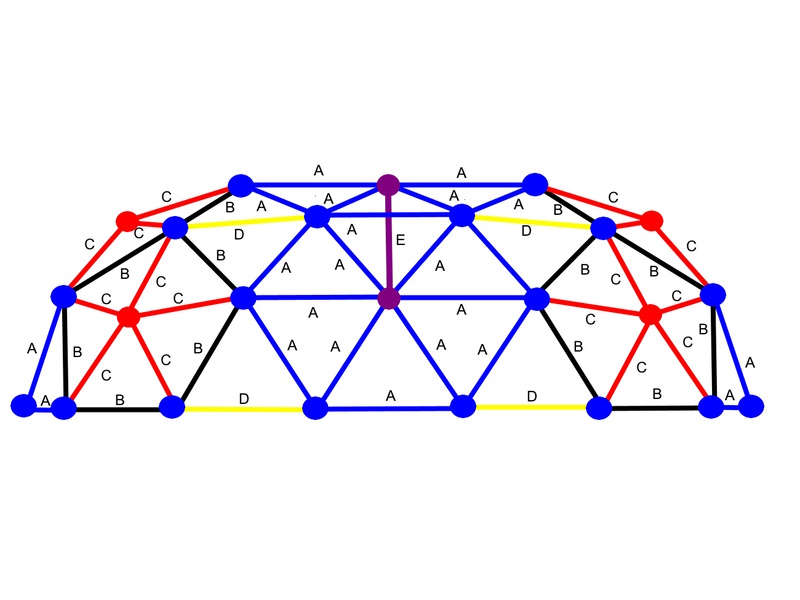
41 hubs, 106 struts.
The 2v Tunnel Dome with 1 Extension produces a larger space for a greenhouse or shed.
Listed 2v Tunnel Dome 1 Extension Sizes: 11' wide, 17' long to 20' wide, 30' long.
You can build larger or smaller 2v Tunnel Domes by adjusting the strut lengths, contact us for details.

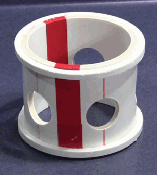
2v Tunnel Dome Dual Covering Hubs

Requires a Chop Saw to Manufacture.

Gudang sex barat
5-way Red Hubs
Gudang sex barat
6-way Blue Hubs

The Dual Covering Hubs are used for building geodesic greenhouses in cold weather environments.

  The Dual Covering Hubs allows a Greenhouse to be covered with 2 layers of plastic, one on the inside and one on the outside of the dome. This creates a "dead air space" between the two layers for plastic for better insulation.

 The Dual Covering Hubs require a chop saw to manufacture.

Tools Needed to Manufacture the Dual Covering Hubs: A Power Hand Drill or Drill Press, and a Chop Saw for cutting the hubs and rings. Gudang sex barat


Each 2v Tunnel Dome with 1 Extension Download Contains:

Not all romance in Gudang Barat is tender. The series is unflinching in its depiction of how love can be weaponized. Female characters, often written with surprising agency, are not mere damsels. A recurring storyline involves a savvy woman—perhaps a club owner or a broker’s assistant—who uses romantic allure to manipulate warehouse leaders. Her “love” is a calculated performance, a means to gather intelligence or consolidate power. When the male protagonist inevitably falls for her, the revelation of her betrayal becomes a pivotal moment of character death—either literal or metaphorical. Not all romance in Gudang Barat is tender

In the landscape of Indonesian digital drama, Gudang Barat stands out not merely for its gritty portrayal of street-level ambition and survival, but for its unexpectedly nuanced treatment of relationships. While the series revolves around the cutthroat environment of a logistics hub—where young men risk everything for a foothold in the drug trade—its emotional core is driven by a web of romantic tensions, fractured loyalties, and quiet longings. These storylines are not decorative subplots; they are the narrative engine that transforms a crime thriller into a human tragedy. The relationships in Gudang Barat illuminate a central theme: in a world where trust is a currency that can get you killed, love becomes both the last refuge of humanity and the most dangerous liability.

Conversely, male characters are shown using performative romance to control women. A warehouse boss might shower a girl with gifts and protection, only to reveal that he considers her property. These arcs are difficult to watch but critically important: they critique the transactional nature of relationships in a criminal underworld, where affection is never free and intimacy is always a negotiation of power.

One character might secretly love the woman his best friend publicly claims. The resulting arc is a slow-burn tragedy of sacrifice and resentment. In one memorable episode, a young man deliberately takes a beating for his rival in love, not out of friendship, but to make himself appear more worthy. The romance never fully consummates; instead, it festers, leading to the kind of quiet betrayal that breaks the gang apart from within. These storylines argue that in the hyper-masculine, emotionally repressed world of Gudang Barat , love cannot be expressed healthily. It twists into possessiveness, self-destruction, or silent suffering.

This dynamic serves a dual purpose. Dramatically, it humanizes the antihero. Watching a ruthless drug distributor hesitate before texting a love interest, or risk his safety to buy her a simple gift, creates a compelling cognitive dissonance. The audience is reminded that beneath the tattoos and the cold-blooded pragmatism, there is a boy who still dreams of a normal life. Narratively, the forbidden love acts as a ticking clock. The audience knows that the criminal world will eventually encroach—a rival will use the girl as leverage, or a police informant will exploit the relationship. The romance is thus a source of constant, aching suspense.

Where Gudang Barat truly distinguishes itself is in its exploration of love that grows within the toxic ecosystem. These are the relationships between warehouse members themselves—often unspoken, simmering with jealousy and repressed affection. A classic storyline involves a love triangle between two best friends and the one woman who works in their orbit (perhaps a cook or a money runner). The tension here is not external (rival gangs) but internal: the unbreakable bond of brotherhood versus the selfishness of romantic desire.

The most hopeful—and rarest—romantic storyline in Gudang Barat is the escape arc. This involves a couple (often a low-level courier and a girl from his past) deciding to flee the warehouse life together. Their romance is built on shared memories of a time before the drugs and the violence. The narrative follows their desperate planning: saving money, faking a death, stealing a boat. The audience roots for them, knowing the statistical improbability of success. A recurring storyline involves a savvy woman—perhaps a

In the few instances where this arc reaches a conclusion, it is almost always bittersweet. They might escape the city, but one of them is wounded. They might reach a quiet village, but the trauma follows. The series suggests that love can inspire escape, but the past’s gravity is immense. The relationship that begins as a salvation often ends as a shared ghost story. Yet, it is precisely this tragic possibility that makes these storylines the most emotionally resonant.



Download a Complete Set of Instructions and Manufacturing License for Building a 2v Tunnel Dome with 1 Extension Using our Patented Hub Design


Gudang sex barat
Geodesic Tunnel Dome with 1 Extension Plans
(with Dual Covering Hubs) Price: $41.00

41 hubs, 106 struts.
Download Geodesic Tunnel Dome Plans with 1 Extension (with Dual Covering Hubs)
Price: $41.00
Gudang sex barat

Secure Credit Card Processing by Gudang sex barat Gudang sex barat

We cannot accept returns on digital downloads.

All digital download sales are final.

If you have any questions, you can call us at 1 (931) 858-6892.


Gudang Sex Barat — Premium Quality

Not all romance in Gudang Barat is tender. The series is unflinching in its depiction of how love can be weaponized. Female characters, often written with surprising agency, are not mere damsels. A recurring storyline involves a savvy woman—perhaps a club owner or a broker’s assistant—who uses romantic allure to manipulate warehouse leaders. Her “love” is a calculated performance, a means to gather intelligence or consolidate power. When the male protagonist inevitably falls for her, the revelation of her betrayal becomes a pivotal moment of character death—either literal or metaphorical.

In the landscape of Indonesian digital drama, Gudang Barat stands out not merely for its gritty portrayal of street-level ambition and survival, but for its unexpectedly nuanced treatment of relationships. While the series revolves around the cutthroat environment of a logistics hub—where young men risk everything for a foothold in the drug trade—its emotional core is driven by a web of romantic tensions, fractured loyalties, and quiet longings. These storylines are not decorative subplots; they are the narrative engine that transforms a crime thriller into a human tragedy. The relationships in Gudang Barat illuminate a central theme: in a world where trust is a currency that can get you killed, love becomes both the last refuge of humanity and the most dangerous liability.

Conversely, male characters are shown using performative romance to control women. A warehouse boss might shower a girl with gifts and protection, only to reveal that he considers her property. These arcs are difficult to watch but critically important: they critique the transactional nature of relationships in a criminal underworld, where affection is never free and intimacy is always a negotiation of power.

One character might secretly love the woman his best friend publicly claims. The resulting arc is a slow-burn tragedy of sacrifice and resentment. In one memorable episode, a young man deliberately takes a beating for his rival in love, not out of friendship, but to make himself appear more worthy. The romance never fully consummates; instead, it festers, leading to the kind of quiet betrayal that breaks the gang apart from within. These storylines argue that in the hyper-masculine, emotionally repressed world of Gudang Barat , love cannot be expressed healthily. It twists into possessiveness, self-destruction, or silent suffering.

This dynamic serves a dual purpose. Dramatically, it humanizes the antihero. Watching a ruthless drug distributor hesitate before texting a love interest, or risk his safety to buy her a simple gift, creates a compelling cognitive dissonance. The audience is reminded that beneath the tattoos and the cold-blooded pragmatism, there is a boy who still dreams of a normal life. Narratively, the forbidden love acts as a ticking clock. The audience knows that the criminal world will eventually encroach—a rival will use the girl as leverage, or a police informant will exploit the relationship. The romance is thus a source of constant, aching suspense.

Where Gudang Barat truly distinguishes itself is in its exploration of love that grows within the toxic ecosystem. These are the relationships between warehouse members themselves—often unspoken, simmering with jealousy and repressed affection. A classic storyline involves a love triangle between two best friends and the one woman who works in their orbit (perhaps a cook or a money runner). The tension here is not external (rival gangs) but internal: the unbreakable bond of brotherhood versus the selfishness of romantic desire.

The most hopeful—and rarest—romantic storyline in Gudang Barat is the escape arc. This involves a couple (often a low-level courier and a girl from his past) deciding to flee the warehouse life together. Their romance is built on shared memories of a time before the drugs and the violence. The narrative follows their desperate planning: saving money, faking a death, stealing a boat. The audience roots for them, knowing the statistical improbability of success.

In the few instances where this arc reaches a conclusion, it is almost always bittersweet. They might escape the city, but one of them is wounded. They might reach a quiet village, but the trauma follows. The series suggests that love can inspire escape, but the past’s gravity is immense. The relationship that begins as a salvation often ends as a shared ghost story. Yet, it is precisely this tragic possibility that makes these storylines the most emotionally resonant.
For telephone orders or questions, call us at .

Or, go to our Contact Us page to send us an email.