


La Via Damna - Francisca Solar .epub -

Since its creation in 1997, elBullitaller’s aim has been to expand the range of textures that can be used in the kitchen. As a result of this research, techniques such as foams, clouds, etc. have been created, representing an evolution in his style.
The Texturas range is essential if you want to incorporate some of our most famous techniques into your kitchen, such as hot jellies, air, gelatine caviar or spherical ravioli.
The products that make up the five families – Spherification, Gelification, Emulsification, Thickeners and Surprises – are the result of a rigorous selection and testing process. Texturas is the beginning of a world of magical sensations that has expanded over the years.
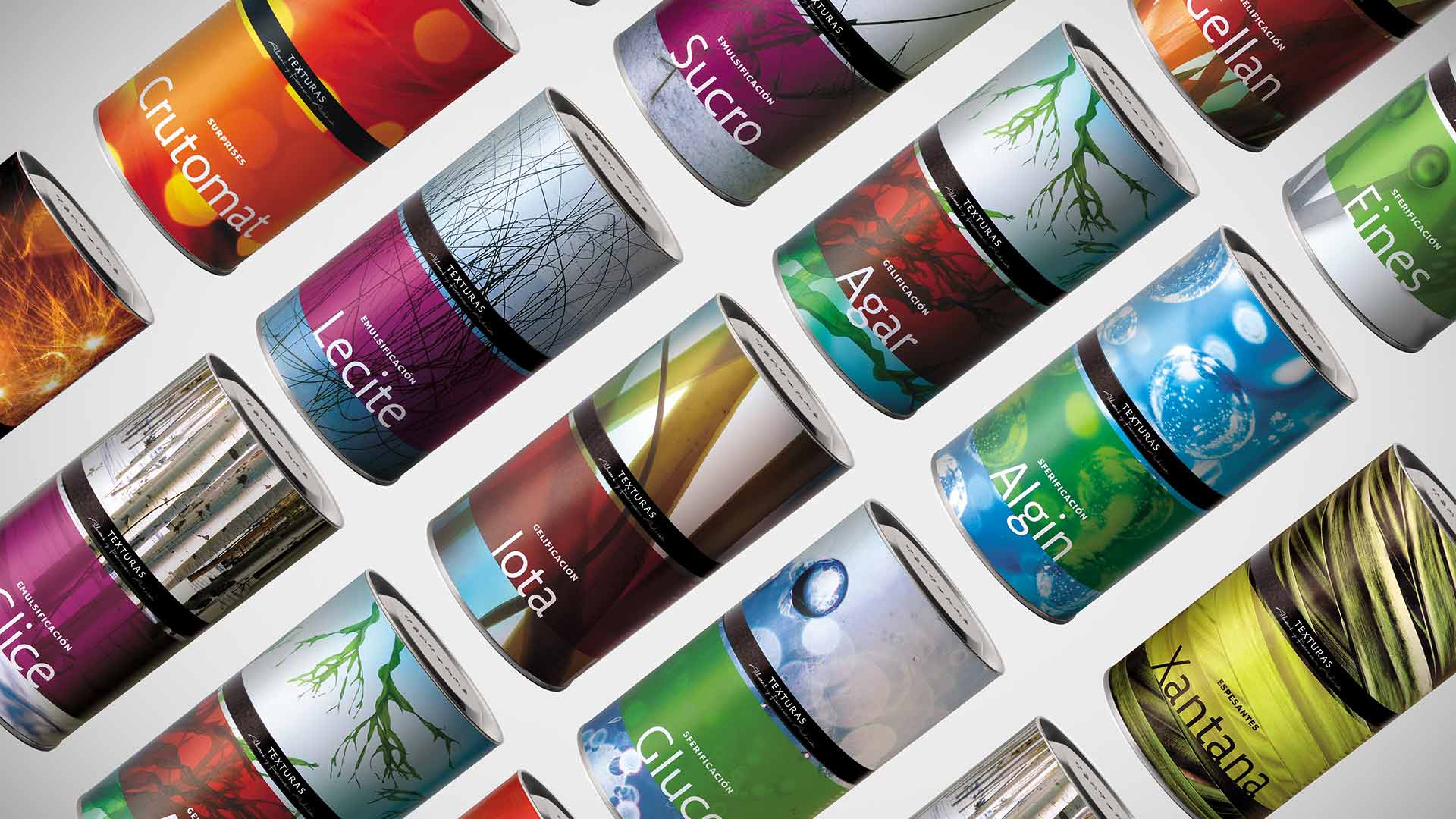
SFERIFICATION
Spherification is a spectacular culinary technique, introduced at elBulli in 2003, that allows you to create recipes never before imagined. It is the controlled gelling of a liquid which, when immersed in a bath, forms spheres. There are two types: Basic Spherification (which consists of immersing a liquid with algin in a calcic bath) and Reverse Spherification (immersing a liquid with gluco in an algin bath). These techniques make it possible to obtain spheres of different sizes: caviar, eggs, gnocchi, ravioli… In both techniques, the spheres obtained can be manipulated as they are slightly flexible. We can introduce solid elements into the spheres, which remain suspended in the liquid, thus obtaining two or more flavours in one preparation. In basic spherification, some ingredients require the use of citrus to correct the acidity; in reverse spherification, xanthan is usually used to thicken. Spherification requires the use of specific tools, which are included in the kits.
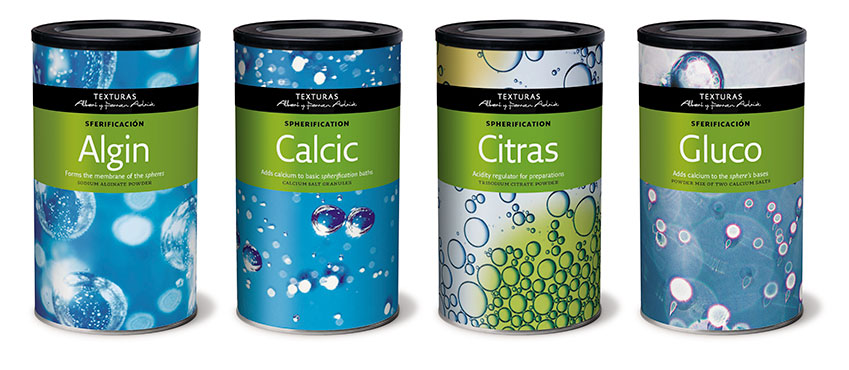
GELLING
Jellies are one of the most characteristic preparations of classical cuisine and have evolved with modern cuisine. Until a few years ago, they were mainly made with gelatin sheets (known as “fish tails”); since 1997, agar, a derivative of seaweed, has been used.
The kappa and iota carrageenans are also obtained from seaweed and have specific properties of elasticity and firmness that give them their own personality.
To complete the family, we present gellan, which makes it possible to obtain a rigid and firm gel, and methyl, with high gelling power and great reliability.
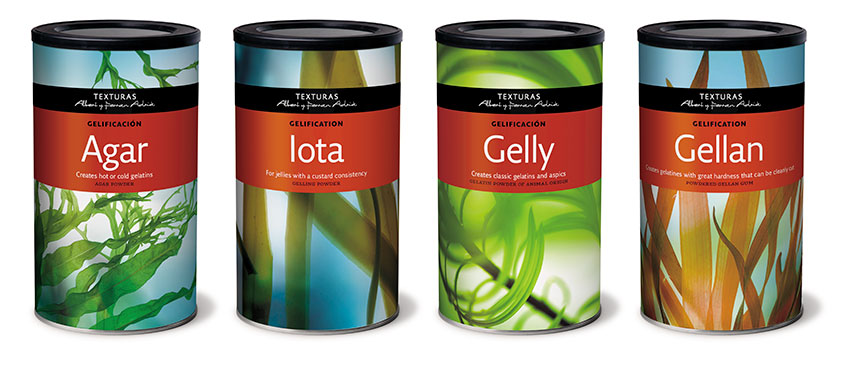
EMULSIFICATION
The Lecite product, which is used to make aerated preparations, has been joined by two other products, Sucro and Glice. The main feature of the latter is its ability to combine two phases that cannot be mixed, such as fatty and aqueous media. This makes it possible to create emulsions that would otherwise be very difficult to achieve. La via Damna - Francisca Solar .epub
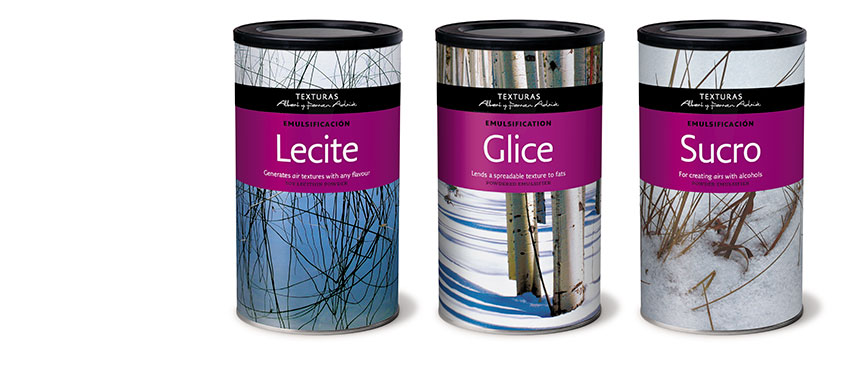
THICKENERS
Products have always been used in the kitchen to thicken sauces, creams, juices, soups, etc. Starch, cornstarch, flour are the traditional thickeners used, with the disadvantage that a significant amount has to be added, which affects the final flavour.
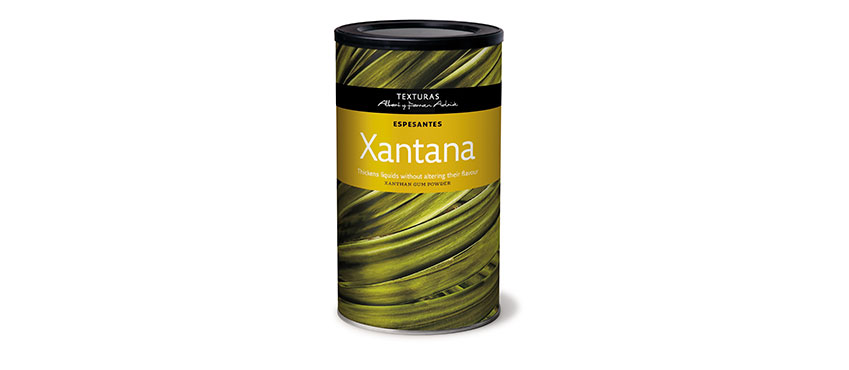
With the Xantana family of thickeners, we present a new product capable of thickening cooking preparations with a minimum quantity and without altering the initial flavour characteristics in any way.
SURPRISES
It is a line of products whose main characteristic is the possibility of consuming them directly, either on their own or mixed with other ingredients and preparations. The EPUB format, therefore, isn’t a mere convenience;
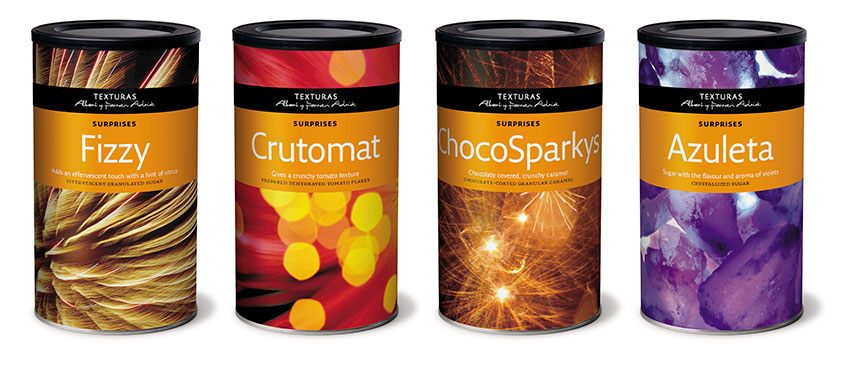
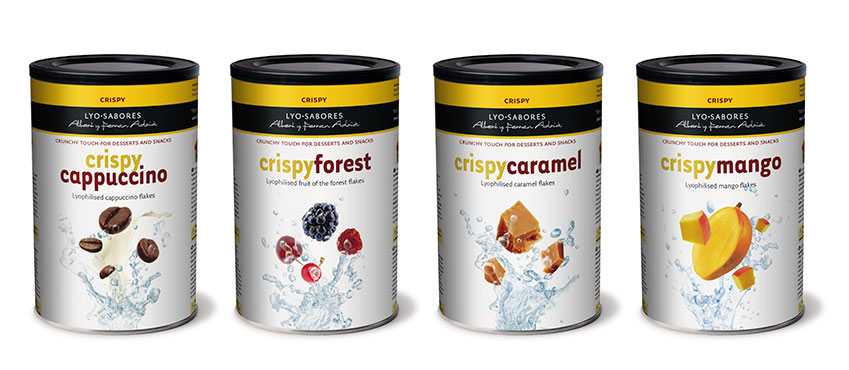
These are products with different characteristics, but with a common denominator, their special texture, specific and unique to each of them, effervescent in the case of Fizzy, Malto and Yopol, and crunchy in Crumiel, Trisol and Crutomat. Flavours and textures that can be a fantastic and surprising solution for refining both sweet and savoury recipes.
OTHER PRODUCTS
The EPUB format, therefore, isn’t a mere convenience; it becomes a narrative tool that mirrors the novel’s fluid boundaries between past and present, oral and written tradition. Francisca Solar (b. 1987, Valencia) grew up in a family of archivists and storytellers. Her doctoral thesis on “Ritual Memory in Iberian Rural Communities” laid the scholarly groundwork for La Via Damna . Yet the novel is far from an academic treatise. Solar herself describes it as “a love letter to the voices we lose when we turn our backs on the places that raised us.”
| Feature | Impact on Reading Experience | |---------|------------------------------| | | The prose adjusts fluidly to any screen size, mirroring the novel’s theme of adaptability and change. | | Embedded Multimedia | Select editions include audio snippets of local songs and ambient forest sounds, deepening immersion. | | Interactive Footnotes | Historical and mythological references appear as tappable pop‑ups, letting readers explore the rich cultural backdrop without breaking narrative flow. | | Accessibility | Adjustable fonts, text‑to‑speech, and high‑contrast modes make the novel reachable for readers with visual impairments, aligning with Solar’s egalitarian ethos. |
By [Your Name] – Cultural Features Desk When the first digital page of La Via Damna flickers to life on a tablet or e‑reader, the reader is immediately pulled into a world that feels both ancient and startlingly contemporary. Francisca Solar’s debut novel—now most commonly encountered as an EPUB file—offers a daring blend of lyrical prose, folkloric reverie, and razor‑sharp social commentary. In a literary landscape often dominated by hyper‑realist narratives, Solar’s work stands out as a vivid, almost hallucinatory map of the forgotten roads that stitch together personal memory and collective myth. The Story in a Sentence La Via Damna follows the wandering journalist Mara Valverde , who returns to the isolated mountain village of Damna after a decade abroad. There she confronts the ghostly echo of her childhood—a tapestry of whispered legends, a crumbling chapel, and a secret that the town has buried for generations. As Mara peels back layers of silence, she discovers that the “road” of Damna is not a mere path through pine‑clad hills, but a conduit for stories that refuse to die. Why the EPUB Matters While the narrative itself is the heart of the book, its digital home—an EPUB—plays a subtle yet crucial role in how the story is experienced:
La Via Damna – Francisca Solar (EPUB) A Journey Through Memory, Myth, and the Margins of History
The EPUB format, therefore, isn’t a mere convenience; it becomes a narrative tool that mirrors the novel’s fluid boundaries between past and present, oral and written tradition. Francisca Solar (b. 1987, Valencia) grew up in a family of archivists and storytellers. Her doctoral thesis on “Ritual Memory in Iberian Rural Communities” laid the scholarly groundwork for La Via Damna . Yet the novel is far from an academic treatise. Solar herself describes it as “a love letter to the voices we lose when we turn our backs on the places that raised us.”
| Feature | Impact on Reading Experience | |---------|------------------------------| | | The prose adjusts fluidly to any screen size, mirroring the novel’s theme of adaptability and change. | | Embedded Multimedia | Select editions include audio snippets of local songs and ambient forest sounds, deepening immersion. | | Interactive Footnotes | Historical and mythological references appear as tappable pop‑ups, letting readers explore the rich cultural backdrop without breaking narrative flow. | | Accessibility | Adjustable fonts, text‑to‑speech, and high‑contrast modes make the novel reachable for readers with visual impairments, aligning with Solar’s egalitarian ethos. |
By [Your Name] – Cultural Features Desk When the first digital page of La Via Damna flickers to life on a tablet or e‑reader, the reader is immediately pulled into a world that feels both ancient and startlingly contemporary. Francisca Solar’s debut novel—now most commonly encountered as an EPUB file—offers a daring blend of lyrical prose, folkloric reverie, and razor‑sharp social commentary. In a literary landscape often dominated by hyper‑realist narratives, Solar’s work stands out as a vivid, almost hallucinatory map of the forgotten roads that stitch together personal memory and collective myth. The Story in a Sentence La Via Damna follows the wandering journalist Mara Valverde , who returns to the isolated mountain village of Damna after a decade abroad. There she confronts the ghostly echo of her childhood—a tapestry of whispered legends, a crumbling chapel, and a secret that the town has buried for generations. As Mara peels back layers of silence, she discovers that the “road” of Damna is not a mere path through pine‑clad hills, but a conduit for stories that refuse to die. Why the EPUB Matters While the narrative itself is the heart of the book, its digital home—an EPUB—plays a subtle yet crucial role in how the story is experienced:
La Via Damna – Francisca Solar (EPUB) A Journey Through Memory, Myth, and the Margins of History


© Albert Adrià, 2026
© 2026 — Solar Index


