
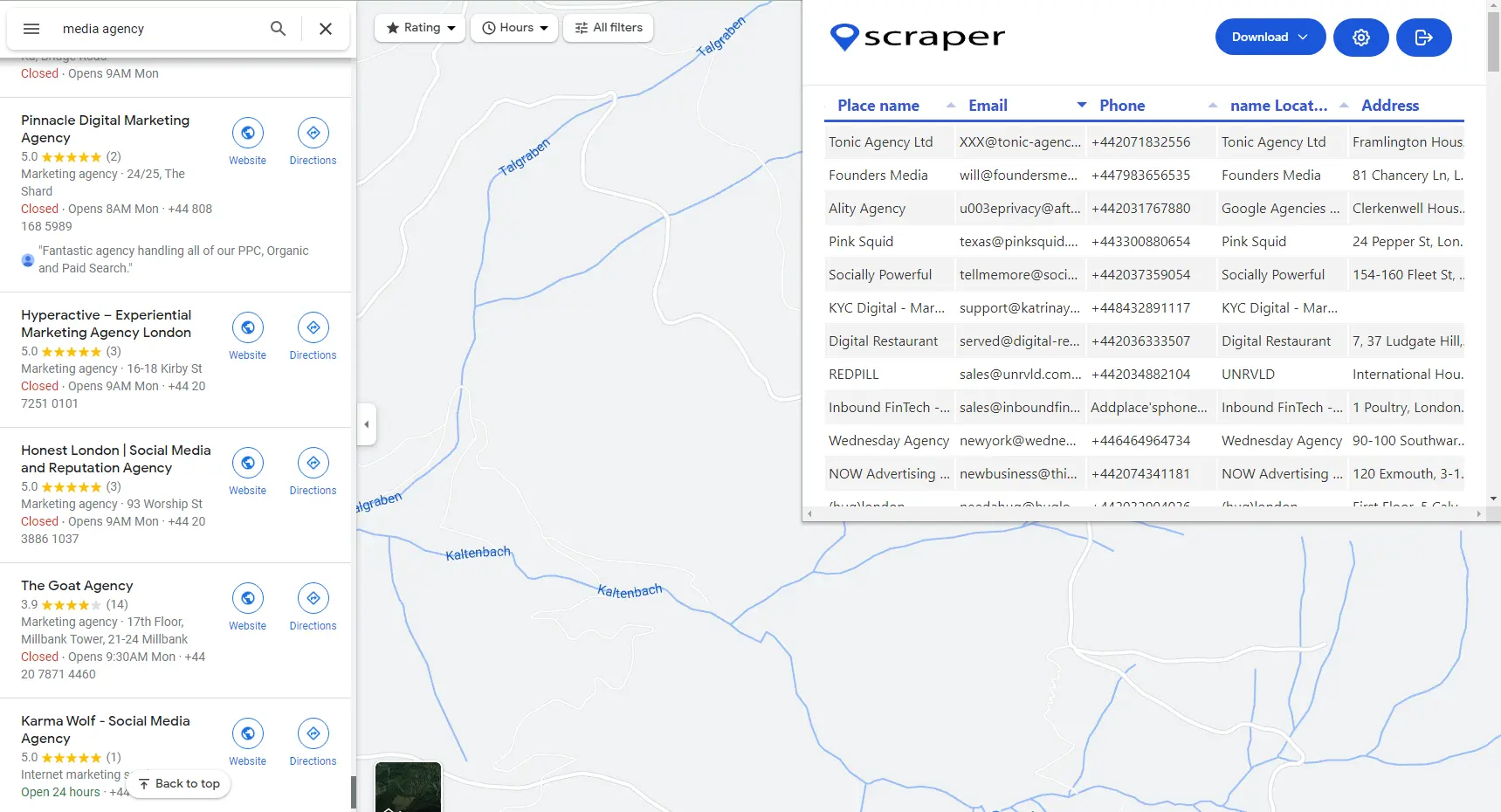
Our Google Maps scraper tool makes it easy to extract data from Google Maps quickly and efficiently. Try it for free.
| What would be helpful to know | Why it matters | |--------------------------------|----------------| | – What problem does this feature solve or what user need does it address? | Helps me frame the description and decide which details are most important. | | Target audience – Who will use or benefit from the feature (e.g., end‑users, admins, developers)? | Determines the level of technical detail and any UI/UX considerations. | | Core functionality – A concise list of the main actions, inputs, and outputs (e.g., “fetch today’s headlines from a remote API and display them in a scrollable list”). | Guides the functional specifications, acceptance criteria, and any required integrations. | | Non‑functional requirements – Performance, security, compatibility, accessibility, etc. | Ensures the feature meets quality standards and fits within existing constraints. | | Dependencies / integrations – Other services, libraries, or modules it must interact with. | Influences architectural decisions and testing scope. | | Success metrics / acceptance criteria – How will we know the feature is done and works as intended? | Provides clear, testable checkpoints for development and QA. | | Any UI/UX mock‑ups or design guidelines – Wireframes, style guides, branding rules. | Allows the UI description to be accurate and aligned with your visual standards. | | Timeline / priority – Any deadlines or sprint allocations? | Helps to scope the work appropriately. |
| What would be helpful to know | Why it matters | |--------------------------------|----------------| | – What problem does this feature solve or what user need does it address? | Helps me frame the description and decide which details are most important. | | Target audience – Who will use or benefit from the feature (e.g., end‑users, admins, developers)? | Determines the level of technical detail and any UI/UX considerations. | | Core functionality – A concise list of the main actions, inputs, and outputs (e.g., “fetch today’s headlines from a remote API and display them in a scrollable list”). | Guides the functional specifications, acceptance criteria, and any required integrations. | | Non‑functional requirements – Performance, security, compatibility, accessibility, etc. | Ensures the feature meets quality standards and fits within existing constraints. | | Dependencies / integrations – Other services, libraries, or modules it must interact with. | Influences architectural decisions and testing scope. | | Success metrics / acceptance criteria – How will we know the feature is done and works as intended? | Provides clear, testable checkpoints for development and QA. | | Any UI/UX mock‑ups or design guidelines – Wireframes, style guides, branding rules. | Allows the UI description to be accurate and aligned with your visual standards. | | Timeline / priority – Any deadlines or sprint allocations? | Helps to scope the work appropriately. |