
Sange Font Sange Font

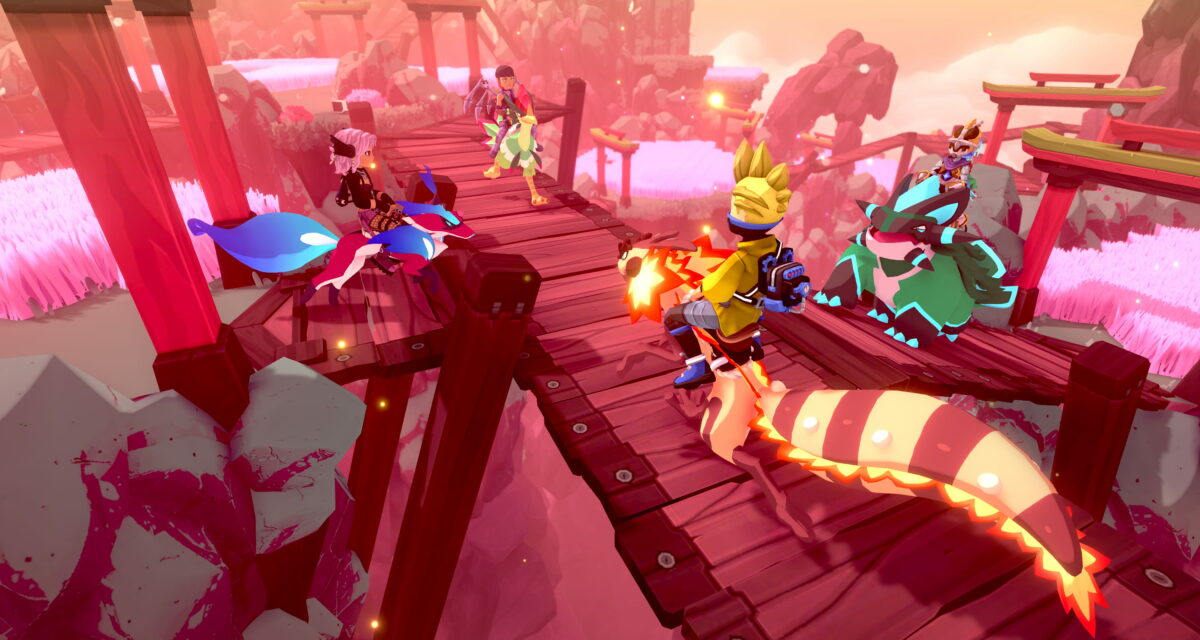
A massively multiplayer creature-collection adventure.

Watch trailer

Font: Sange

Every kid dreams about becoming a Temtem tamer; exploring the six islands of the Airborne Archipelago, discovering new species, and making good friends along the way. Now it’s your turn to embark on an epic adventure and make those dreams come true.

Catch new Temtem on Omninesia’s floating islands, battle other tamers on the sandy beaches of Deniz or trade with your friends in Tucma’s ash-covered fields. Defeat the ever-annoying Clan Belsoto and end its plot to rule over the Archipelago, beat all eight Dojo Leaders, and become the ultimate Temtem tamer!

Features

  • Lengthy story campaign
  • Fully online world
  • Co-Op Adventure
  • Competitively oriented gameplay
  • Advanced character customization
  • Housing
Sange Font

Screenshots & Videos

Latest news

Read more about Temtem
Patch 1.8.4

Font: Sange

Font: Sange

It sings. Sange is available for licensing through Letters from Sweden and major font distributors such as MyFonts, Fontspring, and TypeNetwork.

Introduction: The Quiet Rise of Sange In the vast ocean of contemporary typography, where new typefaces are released daily, few manage to strike a lasting chord. Most are either overly derivative—echoing Helvetica, Futura, or Gotham without adding value—or so eccentric that they become unusable outside a narrow, niche context. But every so often, a typeface emerges that feels both inevitable and fresh. Sange (pronounced sahng-eh or sanj , depending on the foundry’s origin) is one such design. Sange Font

Born from the Swedish type foundry (founded by the renowned typographer Göran Söderström), Sange is a geometric grotesque sans-serif that debuted in the mid-2010s. It quickly gained a cult following among graphic designers, branding agencies, and editorial designers for its unique ability to be both coldly rational and warmly approachable. But what exactly makes Sange stand out? This piece explores its origins, its distinctive anatomical features, its practical applications, and its place in the modern typographic landscape. 1. Origins and Design Philosophy To understand Sange, one must first understand its creator’s intent. Göran Söderström has spoken about his desire to create a typeface that bridges the gap between two seemingly opposing traditions: the strict, almost mechanical geometry of German and Swiss modernism (think Futura or Neuzeit Grotesk) and the subtle, refined calligraphic warmth of the British humanist sans-serifs (like Gill Sans or Johnston). It sings

Sange’s name is a nod to its dual nature. In Swedish, sange can relate to songs or chants—an allusion to rhythm and flow. The typeface was designed to sing on the page, not just stand rigidly in formation. Born from the Swedish type foundry (founded by

For the designer tired of the cold uniformity of Helvetica or the overused charm of Futura, Sange offers a third path. It is a typeface that invites you to look closer, to appreciate the subtle flare of a leg, the careful curve of a hook, the generous breath between letters. In a noisy world, Sange speaks with a quiet, confident, and melodic voice.
Patch 1.8.3

Font: Sange

We’ve adjusted the way Spectator mode and the Skip Animations setting worked: An spectator can’t have Skip Animations ON if…

Read more Patch 1.8.3

Temtem Press Kit

Follow the link to access the complete press kit.

Press Kit
We only use session cookies for technical purposes to enable your browsing and secure access to the functionalities of the website. See more information in the Cookies Policy. We also inform users that our website contains links to third-party websites governed by their own privacy and cookie policies, so you should decide whether to accept, configure or reject them when accessing our website. View more
Cookies settings
Accept

It sings. Sange is available for licensing through Letters from Sweden and major font distributors such as MyFonts, Fontspring, and TypeNetwork.

Introduction: The Quiet Rise of Sange In the vast ocean of contemporary typography, where new typefaces are released daily, few manage to strike a lasting chord. Most are either overly derivative—echoing Helvetica, Futura, or Gotham without adding value—or so eccentric that they become unusable outside a narrow, niche context. But every so often, a typeface emerges that feels both inevitable and fresh. Sange (pronounced sahng-eh or sanj , depending on the foundry’s origin) is one such design.

Born from the Swedish type foundry (founded by the renowned typographer Göran Söderström), Sange is a geometric grotesque sans-serif that debuted in the mid-2010s. It quickly gained a cult following among graphic designers, branding agencies, and editorial designers for its unique ability to be both coldly rational and warmly approachable. But what exactly makes Sange stand out? This piece explores its origins, its distinctive anatomical features, its practical applications, and its place in the modern typographic landscape. 1. Origins and Design Philosophy To understand Sange, one must first understand its creator’s intent. Göran Söderström has spoken about his desire to create a typeface that bridges the gap between two seemingly opposing traditions: the strict, almost mechanical geometry of German and Swiss modernism (think Futura or Neuzeit Grotesk) and the subtle, refined calligraphic warmth of the British humanist sans-serifs (like Gill Sans or Johnston).

Sange’s name is a nod to its dual nature. In Swedish, sange can relate to songs or chants—an allusion to rhythm and flow. The typeface was designed to sing on the page, not just stand rigidly in formation.

For the designer tired of the cold uniformity of Helvetica or the overused charm of Futura, Sange offers a third path. It is a typeface that invites you to look closer, to appreciate the subtle flare of a leg, the careful curve of a hook, the generous breath between letters. In a noisy world, Sange speaks with a quiet, confident, and melodic voice.

Cookies settings