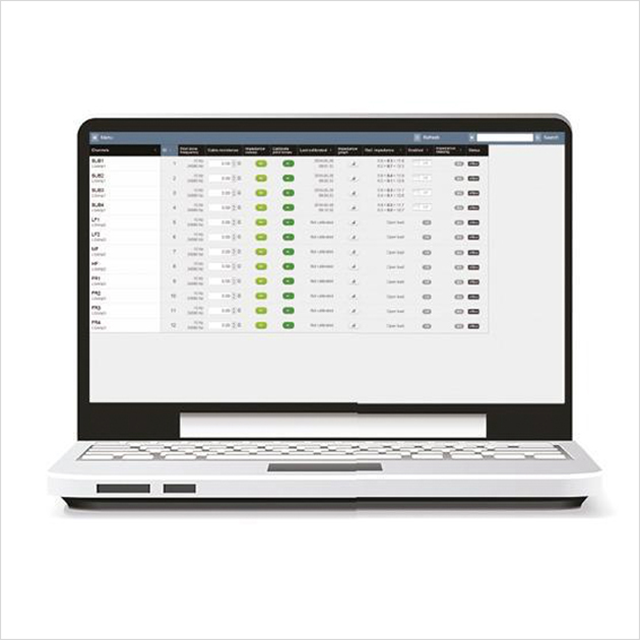
CAFE with ESP: Integrated Software for Fast System Configuration and Surveillance
In addition to providing comprehensive system surveillance and configuration of RPM and other amplifier features such as ISVPL and Breaker Emulation Limiter (BEL), CAFÉ also includes valuable help to save the environment. In combination with the RPM configuration CAFÉ can accurately predict, based on the true SPL and speaker requirements of the individual loads for the given project, estimations of average mains current draw and generated heat in BTU. With our amplifiers' innovative power supply technologies (true Power Factor Correction utilizing Current Draw Modeling) the required mains draw is already best in class in relation to burst power output, but in combination with the BEL the mains draw can also be safeguarded to the predicted level. The end result is precise mains management and thermal control, which allows more accurate (rather than over-specified) provision of mains distribution, cabling and cooling. This technology suite reduces lifetime running costs and minimizes environmental impact. It also reduces demands on UPS systems.
CAFÉ also features an innovative design aid: the Equipment Specification Predictor (ESP). ESP examines the system SPL and speaker requirements for a given project and aids in transforming that data into circuit and amplifier channel requirements. On a system level, CAFÉ supplies a recommendation for optimized placement of channels into amplifiers for the most cost effective solution.
On the surface, the nickname appears straightforward. “MX” is the universal abbreviation for Motocross, derived from “Motorcycle Xross,” a term cemented by the FIM (Fédération Internationale de Motocyclisme). “Bikes” is equally plain. Together, they form a functional descriptor: a game about motocross motorcycles. However, within the simulation community, this nickname distinguishes PiBoSo’s creation from its arcade and simcade rivals. While franchises like Monster Energy Supercross or MX vs. ATV focus on accessibility and spectacle, referring to the game as simply “MX Bikes” signals an adherence to pure, unadulterated physics. It’s a name that makes no promises of easy victories, flashy crashes, or forgiving handling. It promises only bikes and the dirt they ride on.
Furthermore, the generic nature of the nickname is ironically specific. Unlike a branded title like Ride or TT Isle of Man , “MX Bikes” avoids any pretense of career modes, storylines, or licensed glamour. The name suggests a blank canvas—a physics engine first and a game second. This resonates deeply with its core audience: real-life motocross riders and hardcore sim racers who value force feedback, track deformation, and realistic rider body positioning over progression systems. The nickname has become synonymous with a “no training wheels” approach, where a single mistake in braking or lean angle ends a lap. mx bikes nickname and license key
However, I can certainly help you develop the of your request: a thoughtful essay about the nickname “MX Bikes” — its meaning, origins, and significance within the simulation racing community. The Meaning Behind the Name: More Than Just “MX Bikes” In the world of motorsport gaming, names are often chosen for their marketability or broad appeal. Yet, for the dedicated community of simulation enthusiasts, the humble title MX Bikes carries a weight far beyond its simple, two-word construction. Far from being a generic label, the nickname “MX Bikes” has become a badge of authenticity, a shorthand for a hardcore experience, and a subtle declaration of what the simulation is —and what it is not . On the surface, the nickname appears straightforward
